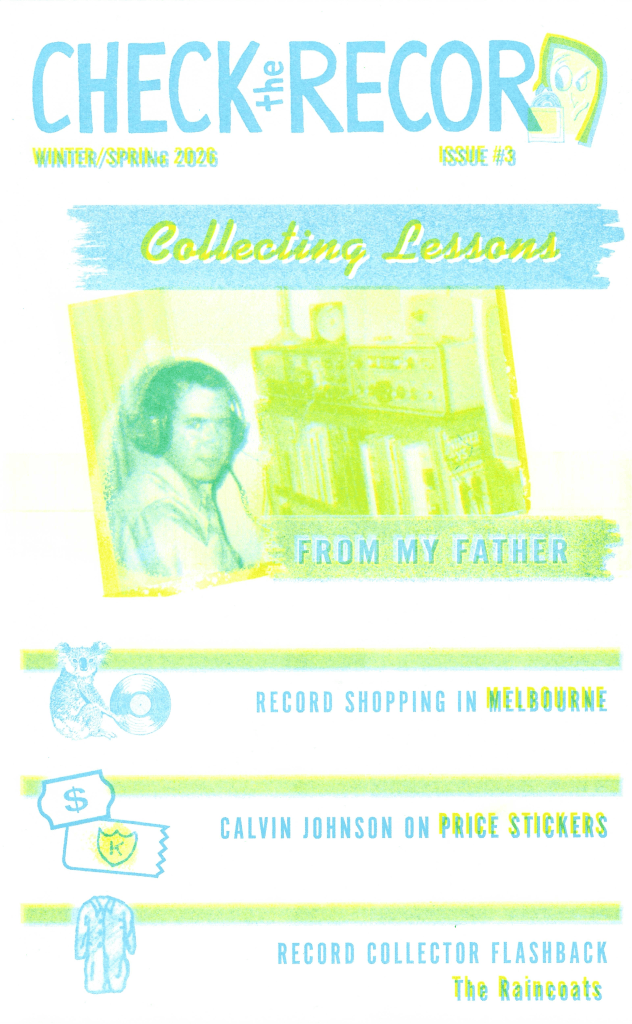
The daily thoughts, dreams and the peculiarities of the record collector can be all-enveloping. You find yourself too frequently contemplating your next big score, perhaps only minutes after completing your last one. Pressing quandaries such as record storage, what to do about price stickers, and whether or not to buy a different country’s pressing of a record you already own are thoughts that easily crowd out those more healthily devoted to family, friends and personal health & hygiene. It’s far too tempting to fall into it, and I’ve done so many times over my extended life; I may perhaps even be in a cycle of this sort right now. Even when I’m not in a collecting cycle, I still have these fantastic dopamine-drenched recurring dreams that involve flipping through vinyl, the sorts of trips to Berkeley and Los Angeles that made me the man I am today.
Sometimes the only means of extracting oneself from it all is to aggressively start the selling process – firing up the eBay account and ordering big packs of mailing boxes from Bags Unlimited. This too I have frequently done, with much current regret, over the years.
Perhaps there’s a better way, one that allows you to keep all the records and do so guilt-free. Jen Matson, the publisher of Check The Record #3, is one who leans in – way in – into the mania. When I read her impenitent fanzines about record collecting (I talked about the other two here and here), I take them as apologia for my own off-and-on obsessions. Her approach to her own methods & madness in, say, accumulating every single overseas Go-Betweens pressing is straightforward, workmanlike and totally no-nonsense. She writes with a sense of fun & whimsy about it all, totally one-upping my own combination of guilt, shame and financial worry. I think I was perhaps too scarred by this documentary about lonely and near-suicidal record collectors, afraid of hitting my sixties in a similar state of mind.
Matson charts a different path, one in which you can – and DO – fly to Melbourne, Australia, ostensibly for a minor music festival, but really to visit every single record store in the metropolitan region. This is a standout piece in Check The Record #3, marked on multiple occasions by the pain of going out of your way to a store only to find that it’s a lame alterna-jerk shop with no used records and overflowing with awful overpriced “Record Store Day” backstock. You can feel her sense of trepidation and triumph when she spots a copy of the Go-Betweens’ Send Me a Lullabye on the wall at Round and Round Records (a store formerly owned by friend of the blog Dave Lang):
“Did I already own a copy of this vinyl? Did I already own copies of all of the Go-Betweens’ albums on vinyl? Yes and yes. But since I am a wee bit of a completist when it comes to this band, I was always a bit sad that my copy was the UK reissue on Rough Trade, not the original Australian pressing on Missing Link Records, with a gatefold sleeve and a different, truncated track listing. In my 35+ years of record shopping, I’d never spotted it in the wild”.
I don’t think you’ll be at all surprised to learn that she bought it, and “left the store in grand spirits”. I get it, and I forgive this behavior: a different track listing and a gatefold sleeve? Forget gassing up the car next week, we can walk instead. Later, she buys a “condition upgrade” copy of a record she already has, and cries about seeing The Gordons’ Flying Nun debut – a phenomenal record that I once owned – for $172, despite it having a stained and scribbled-upon cover. This she does not purchase.
The other two main pieces in Check The Record #3 explore the roots of her collecting predilections, unsurprisingly passed on from her dad, who himself amassed a great and totally unnecessary collection of operation & maintenance manuals for World Word II-era airplanes – and a funny, somewhat droll exploration by Calvin Johnson on how to deal with price stickers on records. Me, I’m so goddamn impatient that I go straight to tearing them off, and therefore have multiple pockmarked LP covers as a result. There are better ways, as you’ll learn should you choose to get your own copy of this thing right here.


