
This Australian fanzine had exceptionally solid distribution in the USA at the time late 1989’s B Side #24 hit my hands, and therefore I’d already been picking them up regularly at Los Angeles’ finer record stores, like it was being published right there in Hollywood. For an Australian of a certain vintage and temperament, B Side was the oracle of all things great, particularly if those things involved high-energy, loud, raw and ugly rocknroll. Simon Lonergan was the editor, at least during the run of issues I own, which travels from issue #19 onward into the early 90s.
In 1989, when B-Side #24 came out, the cross-pollination between the US underground and Australia’s was at a peak, at least in my lifetime. This was the fertile world of Waterfront, Au Go Go, Dogmeat and Red Eye/Black Eye Records in Australia, rubbing uglies with Sub Pop, Amphetamine Reptile and Touch & Go in the US. It’s all right here on the page. Big names abound. Butch Vig. Rapeman. Laughing Hyenas. Beasts of Bourbon. Kim Salmon. Mudhoney. In fact, Mark and Steve from Mudhoney take part in a trans-Pacific phone call interview for this very issue. They’re asked about influences on their sound, “Saccharine Trust or anything like that?”. Mark says, “Saccharine Trust. Gee, I’ve never heard that one before”, before going on to flatter both his interlocutor and the “lucky country” by praising The Scientists and feedtime.
This was the peak era of AU’s King Snake Roost and Lubricated Goat, two wild bands who were both snapped up by Sub Pop to sell a couple of hundred records to an uncaring American public. Loved re-reading Mr. Quinn from King Snake Roost’s USA tour diary here. First of all, they arrived for their tour in San Francisco just in time for the 10/17/89 “earthquake to end all earthquakes”, a major fucking event for those of us who endured it. “All I did was pick up a bass in the music shop and the whole damn city started to shake! We’ve been told that Santa Cruz and possibly San Jose are now reduced to rubble so maybe no show on Friday”.
As it turned out, they were able to make it to Chico – mostly untouched by the quake – on 10/19/89, and then did play Marsugi’s in my then- post-college home of San Jose on 10/20/89. I was there! So that’s what I was doing three days after the earthquake. “Short stroll around the neighborhood – looks deader than Adelaide on Christmas Day. ‘Underground Records’ was the only sign of life, but there’s only burning incense and an old hippy lady inside – guess that doesn’t count as life, huh. Seems as though the ‘quake did a good job on this town”. No Mr. Quinn, that wasn’t the quake, I’m afraid. He also talks about a fistfight that my fellow KFJC-FM disc jockey Les Scurry got into outside the club that night with some doofus DJ from another station…..which I now remember, only barely. There may have been some “tying on” happening this evening. We’d just had a major earthquake, okay??
Back in the pages of B Side #24, we’ve got Sydney, Melbourne and Adelaide scene reports, far more interesting and lively than comparable columns in US fanzines – though nothing about Christmas Day in Adelaide. There’s a huge John Murphy autobiography – just like the Ollie Olsen thing in Forced Exposure around this time, both men’s work combined and apart has continued to travel way over my head. There are also interviews with a band called Meat; one with Radio Birdman/New Christs’ Rob Younger; Toys Went Berserk; and Los Angeles’ own Lazy Cowgirls, who were my favorite band in the world this year and during the two previous. See this blank-looking goofball with the Radio Birdman shirt on in the crowd? That’s me, from the pages of this very same B Side #24, taken at LA’s Anti-Club back in 1988.
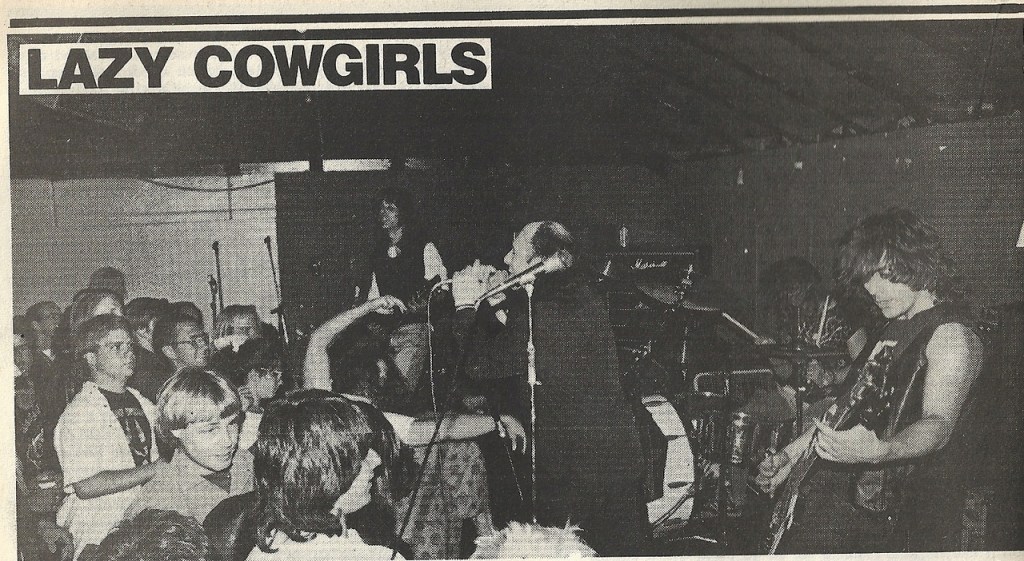
When Lonergan interviews Sonic Youth here in tandem with Bruce Griffiths, he gets all three of Thurston, Kim and Lee to do loads upon loads of yakking, which is great. Thurston Moore banters about how popular speed metal is back home, and he actually calls it speed metal. See folks, we did not call it thrash metal back then, no matter what the kids do now. It was speed metal all the way. Also love how Lonergan keeps transcribing mentions of Michael Gira as “Michael Girard”. For a minute I thought he was confusing him with the Killdozer fella, but that’s another name entirely.
In the lengthy reviews section, there’s much to be explored in the genres of rawk, rock and raw rok. I’ll be honest – I just put a handful of fanzines up on eBay today and was going to put the B Sides in that batch, before I started re-looking at them and was like: what am I thinking? I mean, I’d forgotten about the one with my crowd shot photo, sure; but also, this mag’s great. All I’ll do is piss myself off in five years when I want to re-explore 1989 underground rock from the vantage point of 2029. These things are keepers, and there’s plenty more of them we’ll talk about in due time in this forum.

 Fanzine Hemorrhage