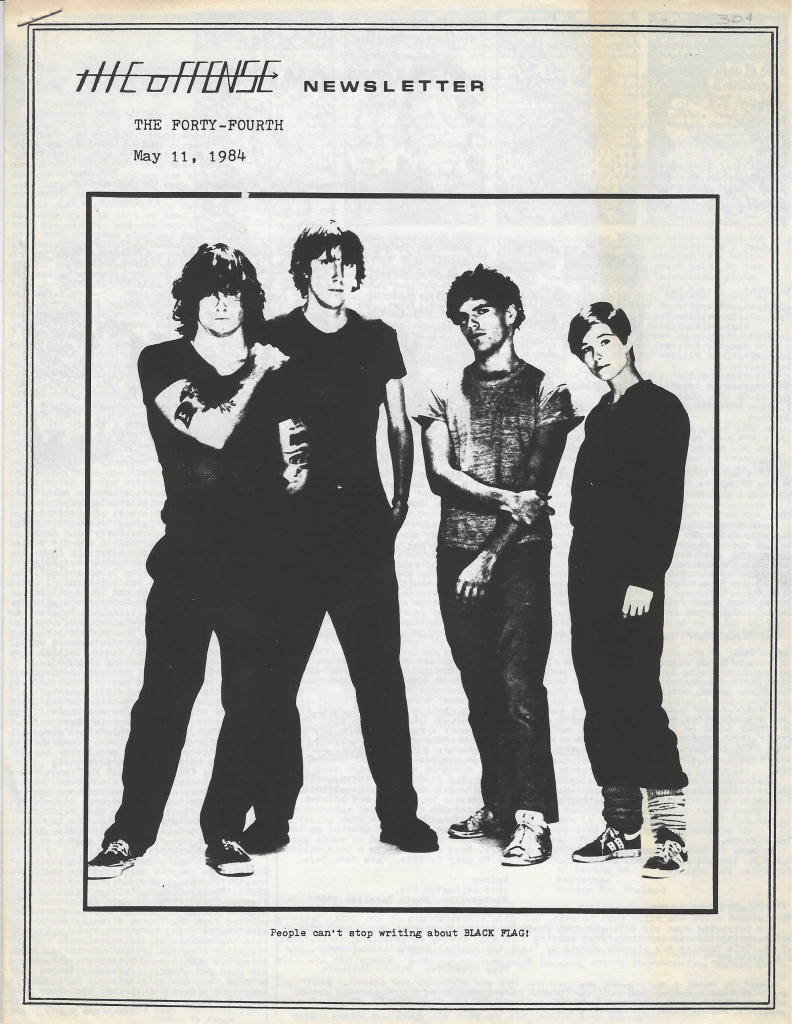
I have discussed this Columbus, OH fanzine and its previous iteration The Offense on several different occasions, and it may behoove you to peruse those discussions, presently: they are to be found here, here, here and here. The rule of thumb in this house is that it’s important to get & gather every and all issues of The Offense and its Newsletter, as it has proven itself to me to be one of the greats – entertaining as hell, and completely tapped into the many currents and scene wars of the first-half 1980s American underground. It’s passionate, loose, and yet highly articulate about everything from those 4AD records shimmering in the import bin to the many post-punk forks & branches needling their way through the USA, including hardcore, paisley psych and goth/doom/deathrock/what-have-you.
The May 11th, 1984 cover’s got Black Flag on it and a small caption, “People can’t stop writing about BLACK FLAG!”. They really couldn’t, could they? In hindsight, I have many thoughts about post-Damaged Black Flag: the plodding, angry, unfunny, metal-tinged, Rollins-era band that extensively toured the world & elsewhere from 1984 to 1986. First – because I remember it well – so much attention was paid to them in 1984 because we are all waiting for them to be great again. Because “the first four years” and Damaged are absolutely monumental, right? But every time some garbage dirge like Loose Nut or The Process of Weeding Out would hit the stacks, everyone would listen to it, forget it quickly, and give them the old “well, there’s always next year” false hope. Meanwhile, the band would scowl and mug on stage and throw fans a few silly punk bones during a gig – a “Six Pack” or a “Nervous Breakdown”, maybe, before proceeding with the plod.
Secondly, let’s admit their reputation was wholly made during 1979-81. I’ve met maybe 2-3 people in my lifetime who, when they talk about Black Flag, want to first talk about 1984-86. Maybe some heshers or speed metal guys. But not music fans. So no wonder poor music fan Don Howland – yes! Don Howland! – is so conflicted here in his lengthy review of a 4/14/84 Black Flag / Meat Puppets / Nig-Heist show at the Reggae Lounge in NYC. (The “Reggae Lounge”??). Don pretends to really like My War, as many pretended to at the time, but he’s not really sure what to make a show in which he’s “pretty disappointed by 90% of the new stuff”. He misses Chuck Dukowski’s onstage bloviating and general mania, but admits that new bassist Kira Roessler is, in fact, “prettier”.
But it’s a great marker of the times, this review, and I feel like it proves my point number one above – that when you’ve made a legend for yourself on the basis of some of the most powerful music of all time, anything else you do – even stoned, angry dirges performed in black dolphin shorts – is going to pale by comparison, and totally confuse the fans. Not that there’s anything wrong with confusing the fans, of course – there’s a reason that we all love Flipper so much. Or even this gig’s Meat Puppets, who are, shall we say, not welcomed to the Big Apple whilst playing the country-fried songs from Meat Puppets II. They say it was the Brits who spit at the bands. Not if you believe Howland’s piece here – us Americans were just as adept at the ‘ol “hawk tuah” as any punk from the mother country.
Joe Piecuch also writes about the 4/27/84 bill with the same lineup; he’s less conflicted about Black Flag and sees them as standing proudly apart from the scene, “as unwilling to lead as they are to be led”. That’s one way of putting it, and probably the only feather in Black Flag’s cap during this era: they couldn’t care less what you thought of them. But is that anything to really hang your hat on, when the records are so incredibly lame?
As discussed in previous reviews here of The Offense Newsletter, the letters page served as the bulletin board for the underground scene, or at least some portion of it. Often they were barbs directed at editor Tim Anstaett, who gave as good as he got. There’s lots of discussion about the best of 1983 reader’s poll results, which The Birthday Party apparently walked away with. Now there was a band, ladies and gentlemen! Steve Hesske gets a page of record reviews – they’re pretty funny – and Rob Wylie interviews a band called NonFiction, with whom I am unfamiliar. Bands such as the Icicle Works and of course the Cocteau Twins are bantered about in the letters. Those, as they say, were the days.
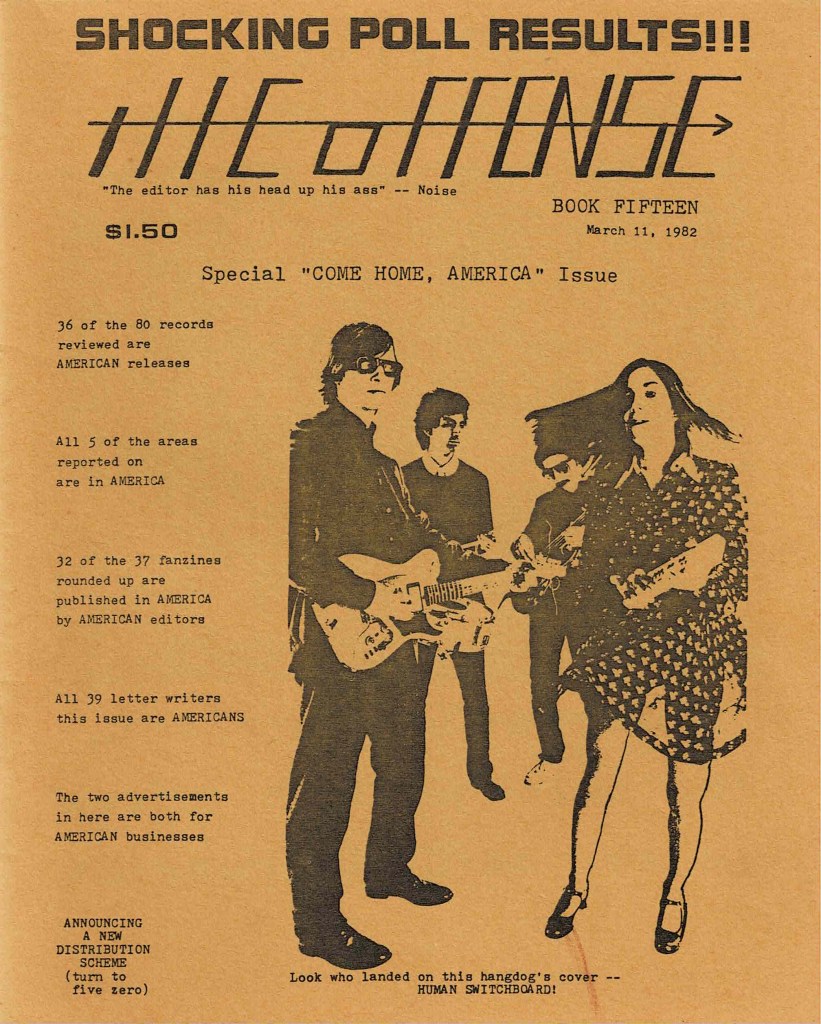
 Fanzine Hemorrhage