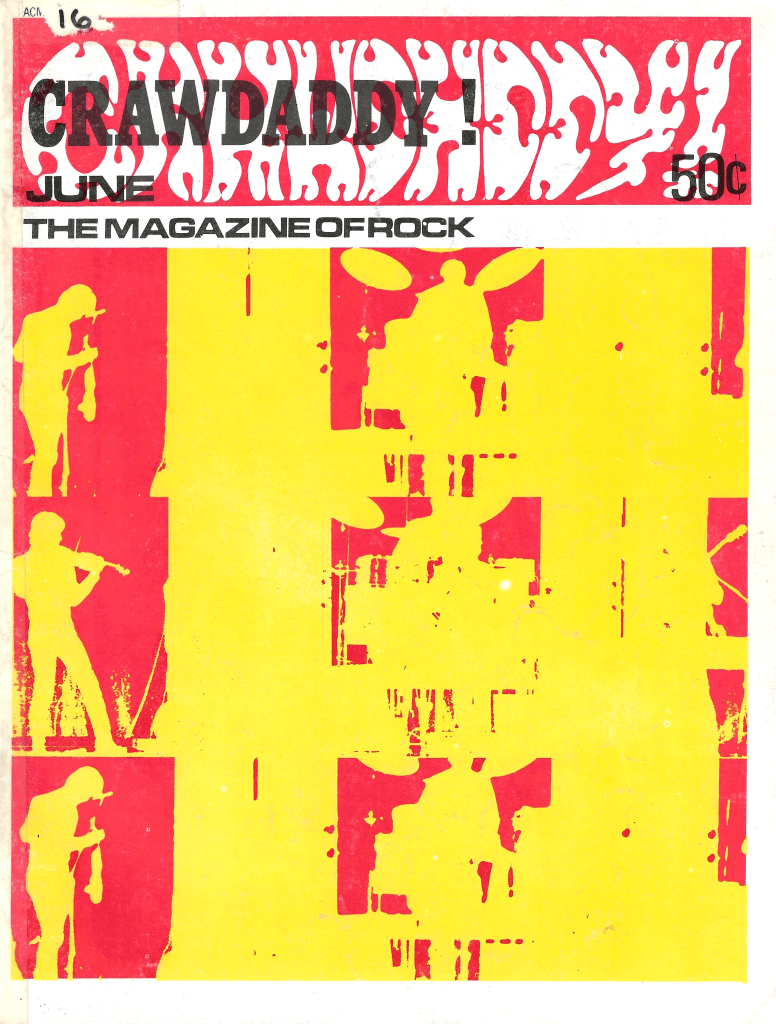
I’ve only got a couple 60s issues of the original Crawdaddy! – “The Magazine of Rock” – and I’m quite aware that it wasn’t a true self-published fanzine, as weren’t the magazines Rock Scene, Teen Screen, Trouser Press, Cheetah, Beetle, Sounds and a few others I’ve bantered about here. It’s a great window into the “rock as culture” movement of the late 60s, in which rock music was dissected as intellectual fodder, the whole “but-what-does-it-all-mean” ethos that was part & parcel of the era’s zeitgeist. It’s still a point of chagrin in my house just how picked-over Bob Dylan’s lyrics were at the time, but I know Bobby Z has his fans, and who am I to say they were wrong to do so.
Paul Williams was the editor of the original version of the magazine, which started up in 1966. His run at the helm ended in late 1968, not long after this issue, Crawdaddy! #16 from June 1968, but the thing continued throughout the 70s, albeit without much cultural cache that I can discern. Williams would later re-launch the magazine in the early 1990s as almost a fanzine again from his then-San Diego home. He provided a writing hub to so many folks who’d go on to be fairly well-known, such as Richard Meltzer and this issue’s Sandy Pearlman and Peter Guralnick. (Wikipedia says that Gilda Radner and Dan Aykroyd wrote for it in the 70s!).
Crawdaddy! #16 finds itself parked pretty well in front of a lot of what I’d like to think I’d be excited about during the hot hot summer of 1968. The United States of America get the cover and an excellent write-up by David Flooke, focused quite a bit on how they might use their synthesizers to build on “the second coming of the new music era, which was heralded by Sergeant Pepper along with Pet Sounds”. People actually liked Sergeant Pepper back then, folks – no, I’m serious! But I love this piece because it’s so excited about “this group that is shaping art into rock”, and also mainly because I really, really dig the LP that Flooke is so excited about, so I’m excited to feel his real-time excitement.
There’s much excitement as well about a Doors live show by Kris Weintraub, who is already rhapsodizing about the godlike power of “Jim”, on a first-name basis. Williams writes about Smokey Robinson & The Miracles and The Beau Brummels, the latter being one of San Francisco’s finest and a big favorite of Mimi Hinman (my mother), though I did not know they were still hoofing it in 1968. David Anderle and Williams then get into a long recorded discussion about Brian Wilson. The article is simply called “Brian”, and it’s part three of their deep exploration into every conceivable aspect of Wilsoniana. Williams sees 1967’s Wild Honey as “some sort of breakthrough”, and they go way into it, with diversions into Dylan, the Doors, Elvis and even Rembrandt and Modigliani. Your patience may vary.
Another piece contrasts The Kinks’ Something Else with The Who’s The Who Sell Out and yes, I’ll say my patience for over-explanation does waver a bit on this one. Tim Ellison – whom I know at least somewhat revered Crawdaddy! – brought back this style of labored writing in the 1990s in his excellent fanzine Rock Mag!, but I also felt Tim, educated as well as he was by comparatively lowbrow punk fanzines, leavened his prose with some real tongue-in-cheek weirdness that might have gotten his submissions summarily rejected by Williams in the 60s, who knows.
But look, the real gem here is a real-time inspection by Pearlman of White Light/White Heat by, that’s right, the Velvet Underground. He zeroes in on many things, only some of which I can really understand, but his biggest excitement is reserved for Maureen Tucker’s Bo Diddley-groove, and the band’s unswerving dedication to repetition. He loves “Sister Ray”. And in 1968, to love “Sister Ray” was to be ahead of the curve, shall we say. White Light/White Heat peaked at 199 on Billboard’s album chart, which only went to 200. He can’t really tell if their repetition means “they’re playing badly or not”, but doesn’t care. I don’t either. It’s probably my favorite album of all time.
Marc Silber ends Crawdaddy! #16 with a piece on Autosalvage’s debut album, which would ultimately be their only. I’d never heard of them, but I like what I’m hearing right now. Of course, I also happen to be on a Moby Grape/Love/Kinks sort of bender right now, so all of this is in my proverbial wheelhouse at the present moment. I’m sure I’ll go back to disparaging the hippies any day now.
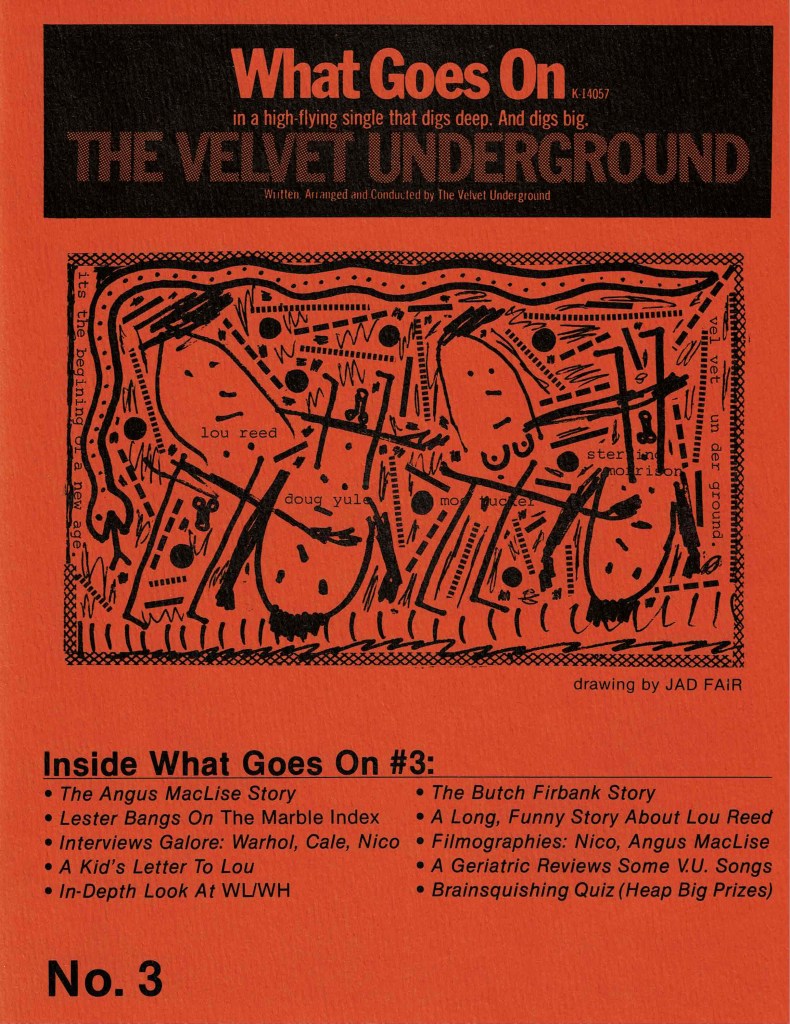
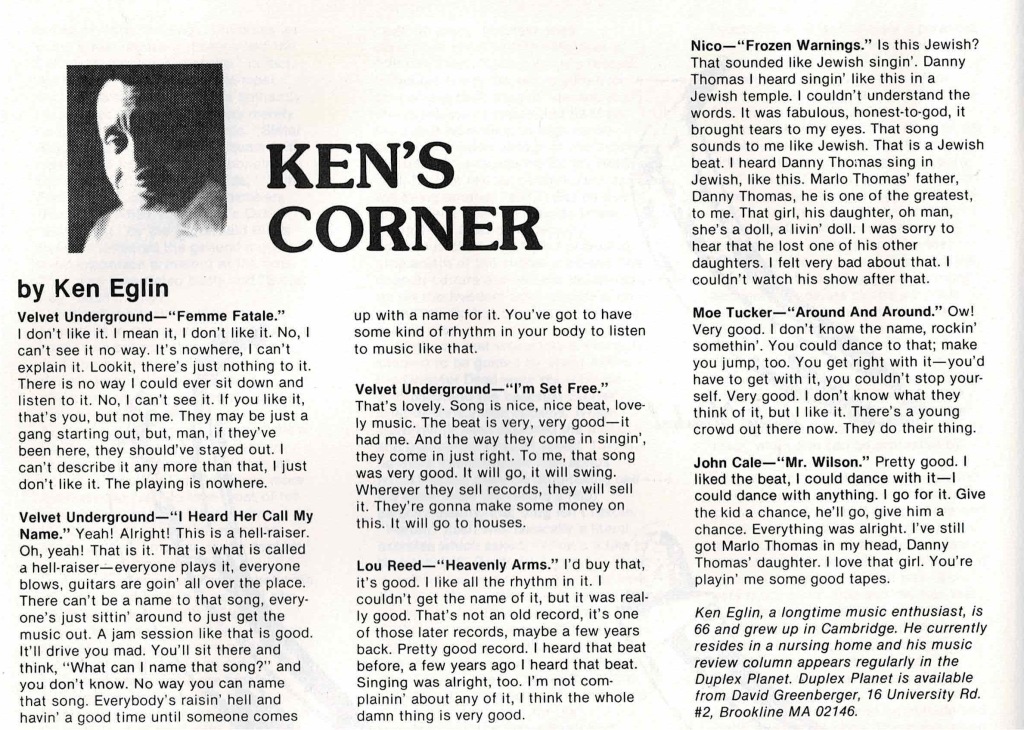
 Fanzine Hemorrhage